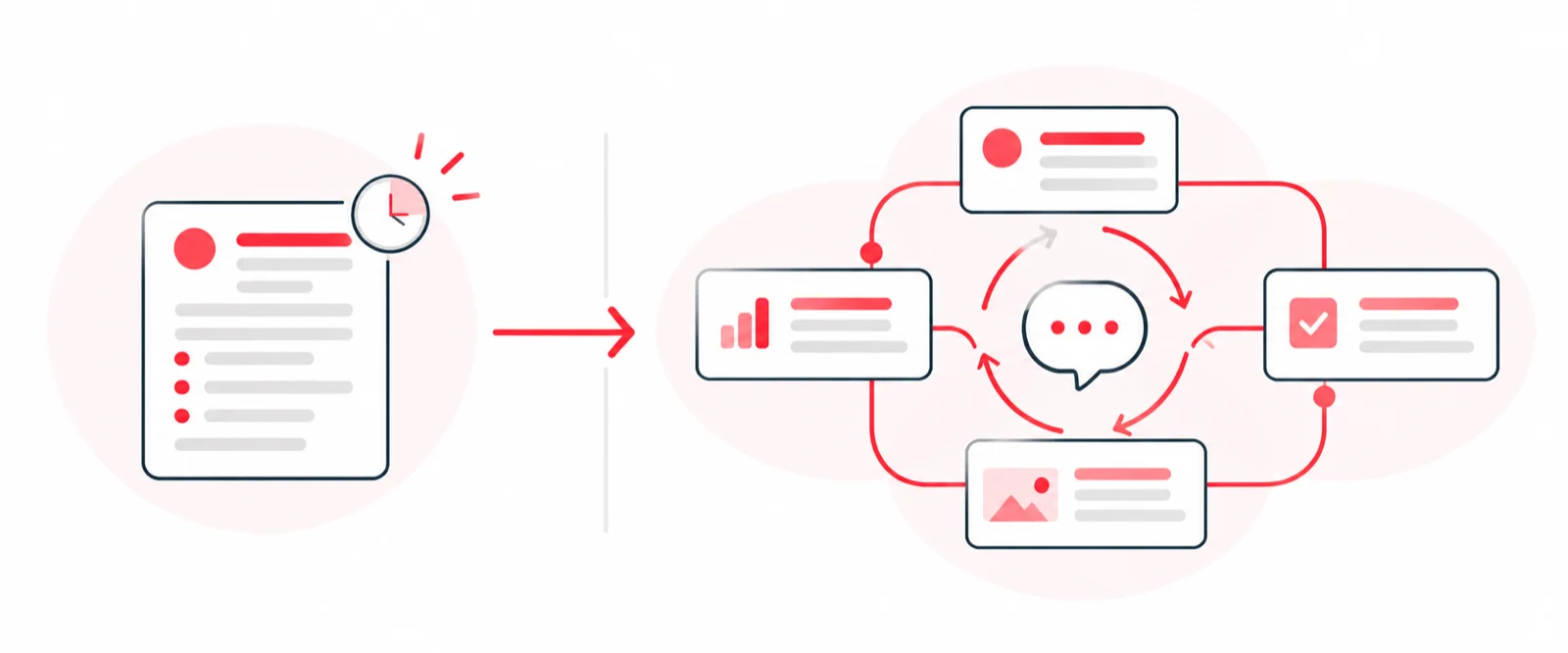
I sat in a review meeting once where an engineer presented a beautifully architected system design. Boxes, arrows, data flows—the kind of diagram that looks like someone actually thought things through. The room nodded. Everyone moved on. Three months later, the thing they built looked nothing like the diagram.
Nobody had actually talked about it.
We obsess over artifacts. PRDs, requirements documents, flowcharts, dashboards, architecture diagrams, wireframes. We treat them like the work itself. We ship them, we iterate on them, we spend hours getting them perfect. But here’s what I’ve realized: the artifact is not collaboration. It’s the evidence that collaboration happened. Or didn’t.
The real work is messier. It’s the conversation where someone asks why you’re solving the problem that way, and you have to actually defend it. It’s the moment someone pushes back and you realize you haven’t thought through the downstream consequences. It’s the exchange where someone from a different function points out a constraint you missed entirely. That’s collaboration. That’s alignment being built.
The artifact is what you make after that work is done.
Most teams have it backwards. They think the diagram is the goal. Get the PRD written, get it signed off, boom—we’re aligned. Except you’re not. You’re just aligned about the artifact. The engineer is still going to interpret the requirements differently than you intended. The stakeholder is going to see the dashboard and ask why it doesn’t do the thing they thought it would do. The designer is going to build something that doesn’t match the wireframe because the context got lost in translation.
Because you optimized for the document, not the understanding.
The lagging indicator trap is that the artifact feels like progress. You can point to it. You can share it. You can check a box. But alignment—real alignment, where people actually get what you’re doing and why you’re doing it, where they understand the tradeoffs and buy in anyway—that doesn’t feel like anything until it’s missing. And by then, you’re already months into building the wrong thing.
The conversation is the work. The artifact is proof you did it. But most teams skip the conversation and just make the artifact anyway, then wonder why execution never matches the plan.
I think we need to flip the metric. Stop measuring collaboration by artifact quality. Stop asking “do we have a good PRD?” Start asking: “Did people actually show up ready to engage? Did they ask hard questions? Do they understand the what and the why? Are they genuinely convinced, or just resigned?”
If you can answer yes to those, the diagram is almost irrelevant. It’s a memo, a reference. But if you can’t answer yes, then no amount of polished documentation is going to fix it.
The artifact will always be a lagging indicator. You can’t change that. What you can change is whether you mistake it for the thing itself. The point of collaboration isn’t the diagram. It’s the alignment. The diagram is what you make when the alignment is already real.
The work is in the conversation. Everything else is just documentation.