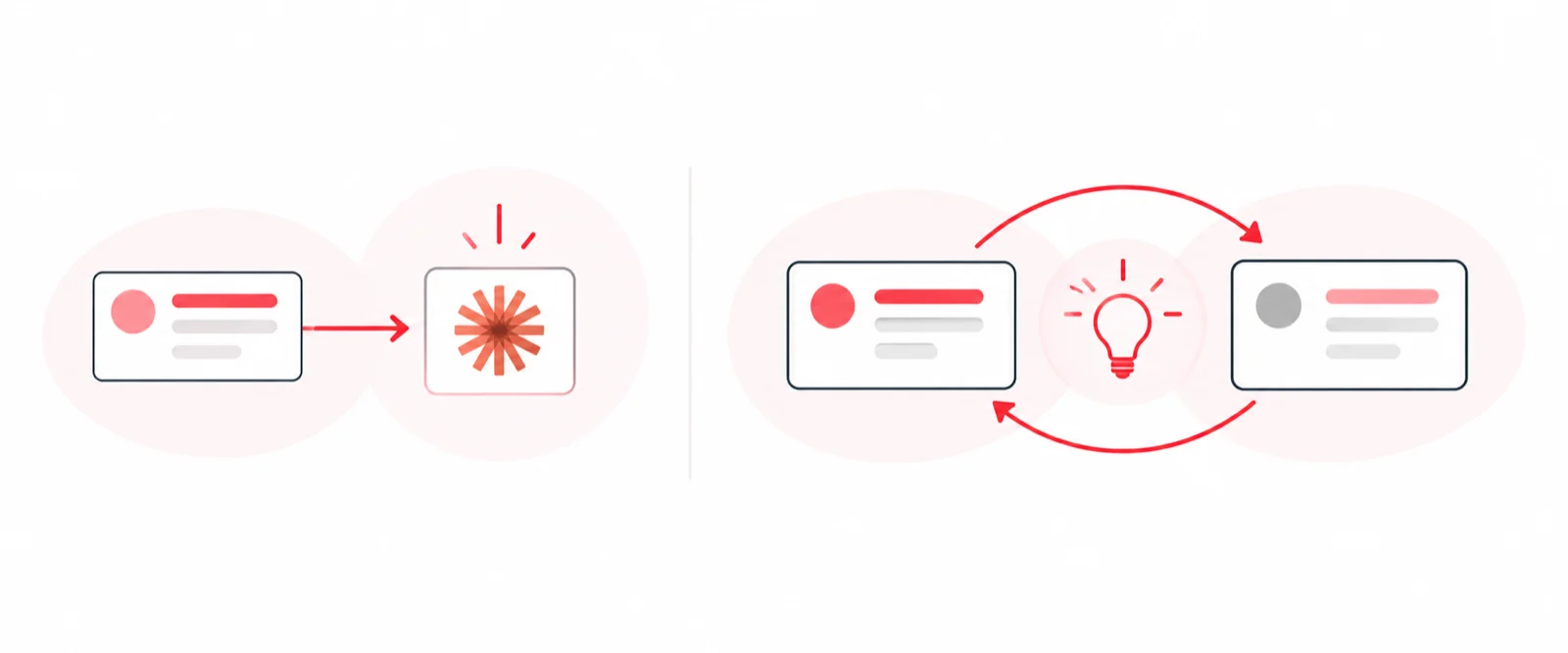
For a while, my relationship with Claude was simple. I had a question or a task, I typed it in, I got something back. Useful, but not that different from a smarter search engine.
Then I started learning about skills, and something shifted.
What skills actually are
A skill is essentially a set of instructions you give Claude once, so you don’t have to give them every time. A template, a format, a persona, a set of guardrails. Claude reads them at the start of a task and uses them to shape the output.
That sounds simple. The implications aren’t.
Without skills, every conversation starts from zero. Claude is capable and fast, but it doesn’t know how you think, how you communicate, or what good looks like in your specific context. You get competent output calibrated to a generic standard.
With skills, Claude already knows what you need before you explain it. The output is consistent. It fits your context. It sounds like something you would actually use.
That’s a meaningful difference.
The thing that made it click
The moment it became real for me was when I started using personas.
I work with non-technical stakeholders regularly. Marketing, operations, leadership. Smart people who don’t need or want the technical detail behind a product decision. They need the what and the why, communicated cleanly, without jargon, without process artifacts getting in the way.
I used to rewrite things multiple times to get to that version. Strip out the technical language, adjust the framing, recalibrate the level of detail. It took time I didn’t always have, and the output was inconsistent depending on how much attention I gave it.
Now I have a skill that frames Claude’s output for that audience. I describe the communication style, the level of detail, what this type of stakeholder cares about and what they don’t. Claude holds that frame for the entire task.
The first time I used it and got back something I would have written myself on a good day, with none of the rewriting, I understood what this was actually capable of.
Consistency is underrated
Here’s what I didn’t expect: the consistency turns out to be as valuable as the speed.
When you’re producing multiple artifacts from the same source, a PRD feeding a one-pager feeding a stakeholder update, consistency matters. The framing should be coherent. The language should feel like it came from the same place. The level of detail should be calibrated to each audience without the core thinking shifting underneath.
Without skills, that coherence depends entirely on how much attention you’re paying on a given day. With skills, it’s built in.
Now I’m learning to chain them
The next layer is chaining. Using the output of one skill as the input for another. PRD skill feeds the one-pager skill. One-pager skill feeds the stakeholder messaging skill. Each step is consistent because each step knows what the previous one produced and what the next one needs.
I’m still figuring this out. The mechanics are becoming clearer, but the art of it, knowing where to draw the boundaries between skills, how much context to carry forward, where a human judgment call needs to interrupt the chain, that’s still developing.
What I can already see is the shape of what it becomes. A workflow that doesn’t just move faster but holds together. Where the thinking you put in at the beginning carries through to every artifact at the end, without losing fidelity at each translation.
What actually changed
The tool didn’t change. My relationship to it did.
Using Claude conversationally is useful. Configuring Claude to understand your context, your audience, your standards is something else. It’s the difference between asking someone for help and actually working with someone who knows how you operate.
I don’t always have time to do things the way I want them done. Skills are how I close that gap without lowering the bar.
That’s worth more to me than any individual prompt ever was.