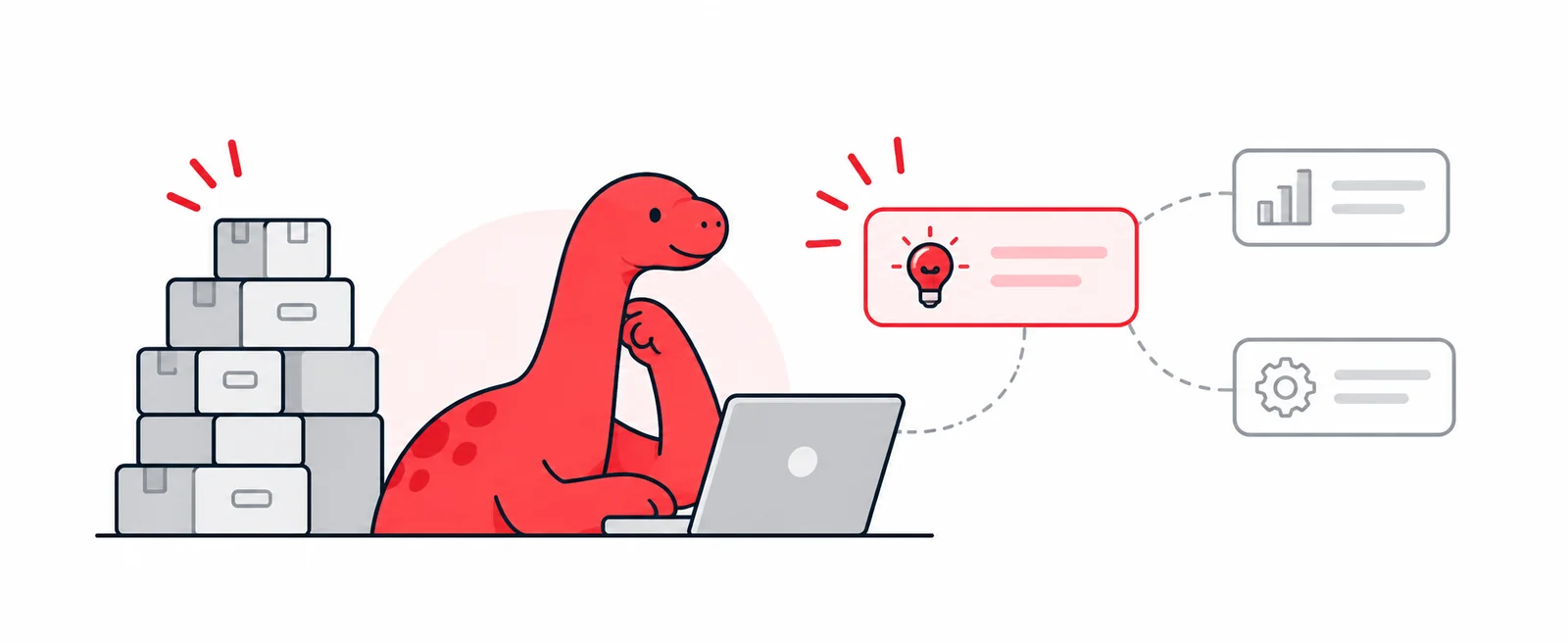
There’s a worry going around that AI is making us worse thinkers. That we hand it a problem, take whatever comes back, and slowly forget how to work things out ourselves.
The worry isn’t made up. An MIT Media Lab study had 54 people write essays with ChatGPT, with a search engine, or with nothing, while it measured their brain activity. The ChatGPT group showed the least engagement and had trouble quoting essays they’d just written. A Microsoft Research and Carnegie Mellon survey of 319 knowledge workers found that the more people trusted AI, the less critically they thought about its output.
So yes, you can use AI to stop thinking. That’s not what’s happening to me.
Most of my thinking used to go to the wrong things
When I look back at a normal week before AI, a lot of my mental energy went to work that only looked like thinking. Remembering where I left something. Formatting a document so it read well. Rewriting the same update for three audiences. Getting a CSS layout to behave. Holding fifteen small tasks in my head so none of them dropped.
None of that is hard. It’s just constant. And it all draws from the same tank I need for the decisions that matter: what to build, what to cut, what the user is actually trying to do, how to tell a team something they don’t want to hear.
That tank is smaller than we like to admit. By the end of a day of busywork, I had less left for the work that needed me.
What AI takes, and what it gives back
Now a lot of that load goes somewhere else.
I write the thinking in a PRD and let AI shape it into a clean document. I describe a screen and Claude builds it, and I spend my attention on whether it’s the right screen. My illustration style is mine, but I don’t spend an afternoon producing each image anymore. When I built a chores app for my family and a finance tracker that turned into three apps, the code wasn’t where my head was. The question of what the family would actually use was.
I’m not thinking less. I’m thinking about different things. More of my attention goes to the problem, the trade-offs and the people, and less to the mechanics of getting it on the page.
Where it goes wrong
The research is a fair warning, and I’ve felt the trap myself. I once spent $25 and three hours prompting my way through a layout I could have fixed by hand in 30 minutes. I’d stopped thinking and started pulling a lever.
The MIT result makes sense to me for the same reason. Writing an essay is the thinking. If AI writes it, you didn’t do the work, so of course you don’t remember it. The Microsoft finding points the same way: the people who stayed sharp were the ones who trusted their own judgment and checked what came back.
So the line I try to hold is simple. AI can take the work that surrounds the thinking. It can’t take the thinking.
How I keep the thinking mine
A few habits keep me on the right side of that line:
- I decide before I prompt. If I can’t say what good looks like, I’m not ready to ask for it. That’s why I still write the PRD first. Clarity isn’t overhead; it’s the part that’s mine.
- I review like it’s someone else’s work. Because it is. A clean answer isn’t a correct one, and quality is now the scarce part.
- I do the hard part by hand when it’s the point. If I need to understand something, I work through it myself, and use AI to check me rather than replace me.
- I spend what I saved on purpose. The hour AI gives back is only worth something if it goes to a real problem, a harder conversation or a better question. Filling it with more busywork just moves the tank somewhere else.
Room to think
The best thinking I’ve done in the last year didn’t happen while I was typing. It happened on a walk, in a conversation with my team, or staring at a problem long enough to see it differently. That kind of thinking needs room, and for most of my career the room was full of small things.
AI didn’t make me stop thinking. It cleared the room. What I put in it is still up to me.