For most of my career, the distance between an idea and an app on someone’s computer was measured in quarters. Requirements, design, a build, a review, a release, a way to install it, a way to sign in. Most internal tools never made it. They died in a backlog because they weren’t worth a quarter.
That distance is now one menu item.
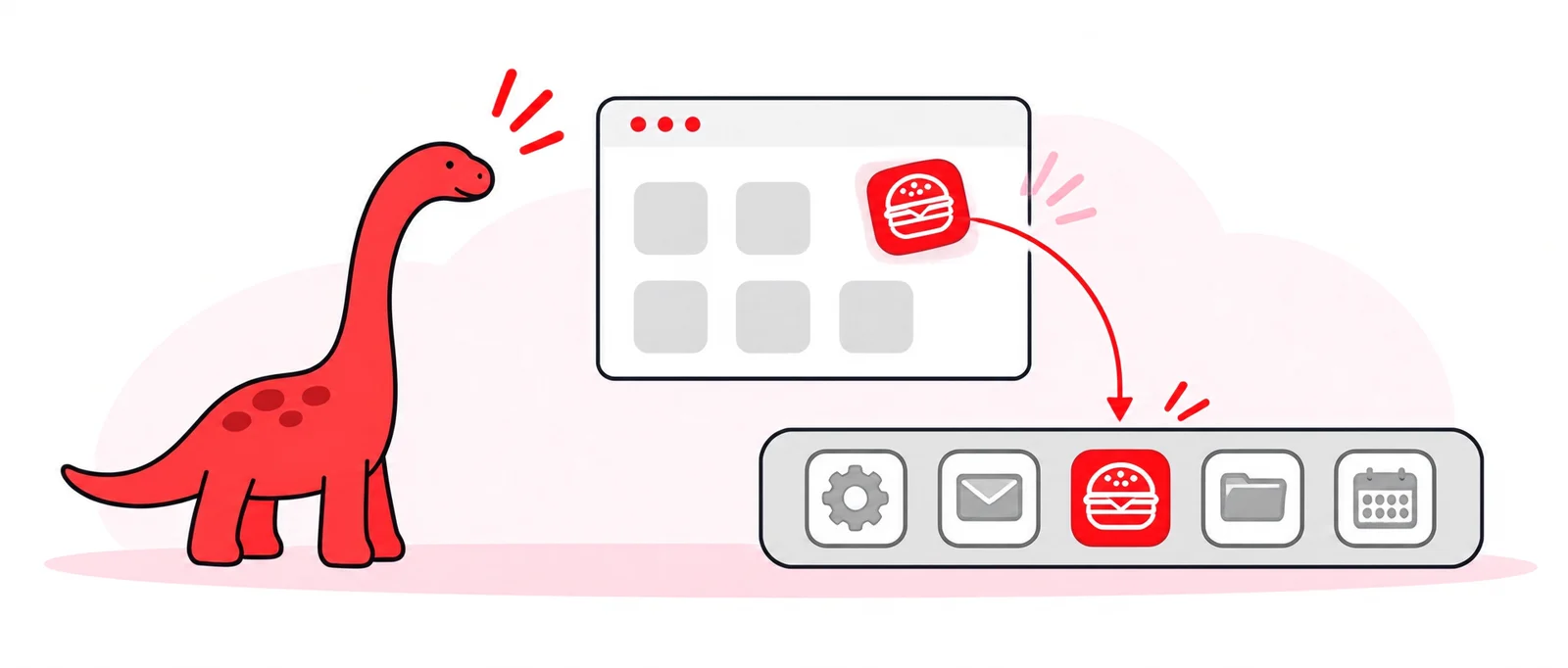
Anthropic just made Claude artifacts installable as Mac and Windows apps. You describe a tool to Claude, try it as an artifact, then choose “Install as app” from the Share menu. It “gets its own icon and opens in its own window instead of inside Claude.” It can use Claude and your connected tools. It updates itself when you edit the artifact. There’s no packaging, no signing, no API key and no separate login. It’s in beta on all plans.
Build, publish, install and update, all from one tool. I think this changes the game for product teams, and not mainly because of the building part.
What actually got removed
AI already made building fast. I’ve written about building a working product in 20 minutes and turning a PRD into a prototype in an afternoon. But the prototype always lived somewhere awkward. A link in a chat. A browser tab you had to remember. A thing you demoed in a meeting and then nobody opened again.
What this removes is the last mile: getting the thing onto someone’s machine as something they open every day. That last mile is where most good internal tools used to die. Somebody had to host it, secure it, handle sign-in and keep it running. Now the tool sits in the dock next to email.
What I’d use it for first
The tools nobody would ever prioritize. Every team has a list. The ops lead who wants one screen showing every store’s open issues. The analyst who rebuilds the same weekly report by hand. These never beat guest-facing work for a slot on the roadmap, and they shouldn’t. Now they don’t need a slot.
Prototypes people live with. A demo gets polite nods. A tool someone uses every morning for two weeks gets real feedback: what they ignore, what they work around, what they’d pay for. That’s a much better input to a PRD than a meeting.
Personal workflows. I already run a family hub with three apps I built with Claude. Having each one open in its own window, instead of hunting for a tab, is exactly the kind of small thing that decides whether a tool gets used.
The new bottleneck
Here’s the catch. When anyone can ship an app to their desktop in an afternoon, you get a lot of apps.
I learned this the hard way on that finance tracker. When building gets cheap, your ideas speed up to match your tools, not your judgment. I set out to build one app and ended up with three. Inside a company, multiply that by every curious person on the team.
The constraint isn’t building anymore. It’s deciding. Which tools deserve to exist, who owns them and what happens when the person who built one changes teams. I made a similar point about approvals becoming the bottleneck when AI builds in a day. This is the same problem, one step further down the line.
Four rules I’d set first
1. One job per app, written down. Before you install it, write one sentence on what it’s for. If a new feature doesn’t serve that job, it goes on a list, not in the app.
2. Every shared app has an owner. A name, not a team. If it breaks or gives a wrong answer, someone fixes it or turns it off.
3. Default permissions unless you built it. Installed apps start with what a browser page could do. They can ask for more, up to full access to your files and programs. Anthropic is clear that it “doesn’t review apps before you install them, so only give full access to apps you trust.” I’d keep full access for tools I wrote myself. The good news is that Claude asks again every time an app changes, and Team plans start with full access off.
4. A short retire list. Once a quarter, look at what’s installed and delete what nobody opened. Cheap apps should be cheap to remove, too.
None of this needs a committee. It needs about ten minutes of thinking before each install.
What it means for product managers
For years, the job was partly about rationing engineering time. Which ideas got built was a scarce-resource decision, and that scarcity forced good questions.
When an app costs an afternoon and installs in a click, that rationing goes away for a whole class of tools. What’s left is the part of the job that was always the real work: knowing what’s worth building, for whom, and when to say no, even to yourself.
The teams that win with this won’t be the ones with the most apps. They’ll be the ones who can tell which three matter.
Where I’d start
Pick the one internal tool your team has asked for longest and never got. Describe it to Claude, use it as an artifact for a week, and install it only if you opened it every day. If you did, write its one-sentence job, put your name on it and share it with one teammate. That’s your first app, and your first rule.