If you’ve used AI for anything long, you’ve seen it happen.
The first hour is great. The model gets it. It remembers your constraints, your naming, the thing you said not to do. Then, somewhere in hour two, it starts drifting. It suggests the idea you already rejected. It forgets a requirement. It contradicts something it wrote an hour ago.
It didn’t get dumber. It ran into the limits of its context window.
The short version
A model doesn’t remember anything between requests. Every time it answers, it reads everything in front of it from scratch: its instructions, your files, the whole conversation so far, the results of any tools it used. Then it writes the next reply.
The context window is how much it can read at once. It’s measured in tokens, which are chunks of words. A rough rule of thumb in English is about three-quarters of a word per token.
When the conversation gets longer than the window, something has to go. Older messages get dropped or summarized. Whatever falls out, the model no longer knows.
That’s why it “forgets.” It was rereading all along.
The kitchen version
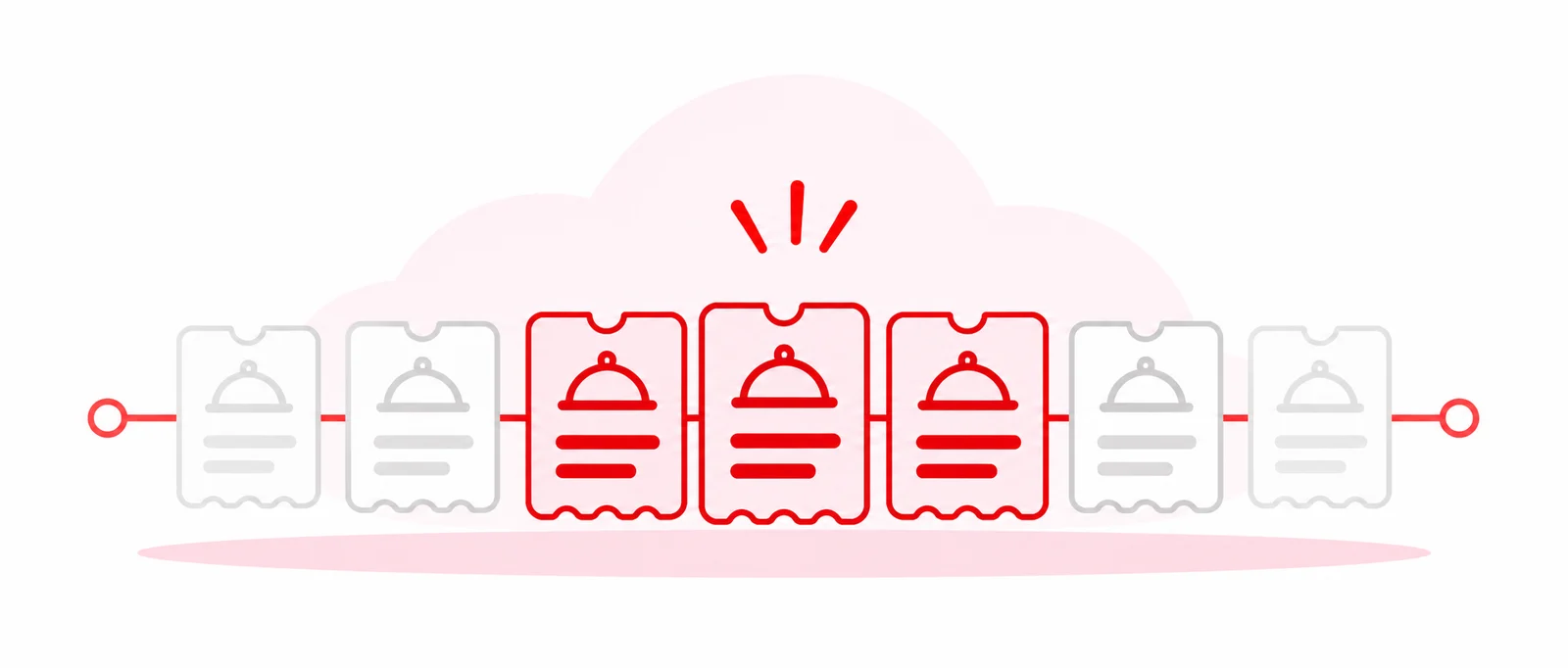
In my note on what a harness is, I compared the model to a cook and the harness to the kitchen. The context window is the ticket rail.
Everything the cook knows about the current rush is on that rail. What was ordered, what’s on the grill, the allergy note on table six. A rail only holds so many tickets. When it’s full, the oldest ones come down.
And here’s the part people miss: even before the rail is full, a crowded rail makes the cook worse. Twenty tickets is harder to work from than five. Things get missed.
Bigger isn’t the same as better
Context windows have grown fast. Chroma’s research team noted that the latest models now take inputs reaching the millions of tokens. That sounds like the problem is solved.
It isn’t. In the same report, Chroma tested 18 models and found that performance “grows increasingly unreliable as input length grows,” even on simple tasks. They called it context rot.
Anthropic says the same thing in its guide to context engineering: as the window fills up, “the model’s ability to accurately recall information from that context decreases.” Their advice is to treat context “as a finite resource with diminishing marginal returns.”
A bigger rail just holds more tickets. It doesn’t help the cook find the right one.
Why agents lose the thread
This matters most for agents, which work for a long time on their own.
An agent building an app, researching a market or working through a backlog will fill its window. Anthropic’s engineers put it plainly in their post on long-running agents: “most complex projects cannot be completed within a single window.”
Their first fix was compaction, where the harness summarizes the conversation so far and starts fresh with the summary. It helped, but they wrote that “compaction isn’t sufficient.” Summaries lose details, and the next session doesn’t always get clear instructions.
What worked was a shift handoff. A progress file logging what’s been done, a feature list of what’s left and a clean history of changes. Every new session starts by reading those, the same way a cook coming on shift reads the board before touching anything.
Not a bigger window. A better handoff.
What product people should do with this
Keep the important stuff out of the chat. If a requirement matters, put it in a file the model reads every time, not in message forty of a long thread. That’s most of what changed when I started treating Claude as a collaborator: standing instructions and project files instead of repeating myself.
Start fresh on purpose. When a session starts drifting, don’t argue with it. Ask for a summary of decisions so far, check it, and open a new session with that summary. You’ll get the first-hour model back.
Break big work into steps. One giant prompt fills the window with everything at once. A pipeline of smaller steps gives each step only what it needs. It’s also how I’d write a PRD with AI: section by section, with the thinking settled before the writing.
Ask vendors how they handle it. When you evaluate an AI product, ask what happens when a task outgrows the window. Does it summarize, hand off, look things up when it needs them? A vague answer tells you a lot.
Write handoffs like you would for people. Good teams already do this. Shift notes, decision logs, a clear definition of done. Agents need the same thing, and they’ll actually read it every time.
Every ticket rail has a length. The teams that get the most out of AI aren’t waiting for longer rails. They’re keeping theirs clear.