Everyone argues about which AI model is best. Hardly anyone talks about the harness, and the harness is often why the same model feels brilliant in one product and useless in another.
If you’re a product person working with AI, it’s the word worth learning this year.
The short version
A model on its own does one thing. You give it text, it gives you text back. It can’t open a file, check a calendar, run code or remember what you asked yesterday.
A harness is everything wrapped around the model that lets it do real work:
- Instructions. The standing brief the model reads before every task: who it’s working for, what good looks like, what it must never do.
- Tools. The actions it’s allowed to take. Search the web, read a file, query a database, place an order.
- Context and memory. What gets put in front of the model each turn, and what carries over from one session to the next.
- The loop. Think, act, look at the result, decide what’s next, repeat until the job is done.
- Checks and guardrails. Tests that verify the work, permissions that stop it from doing something it shouldn’t, and a log of what it did.
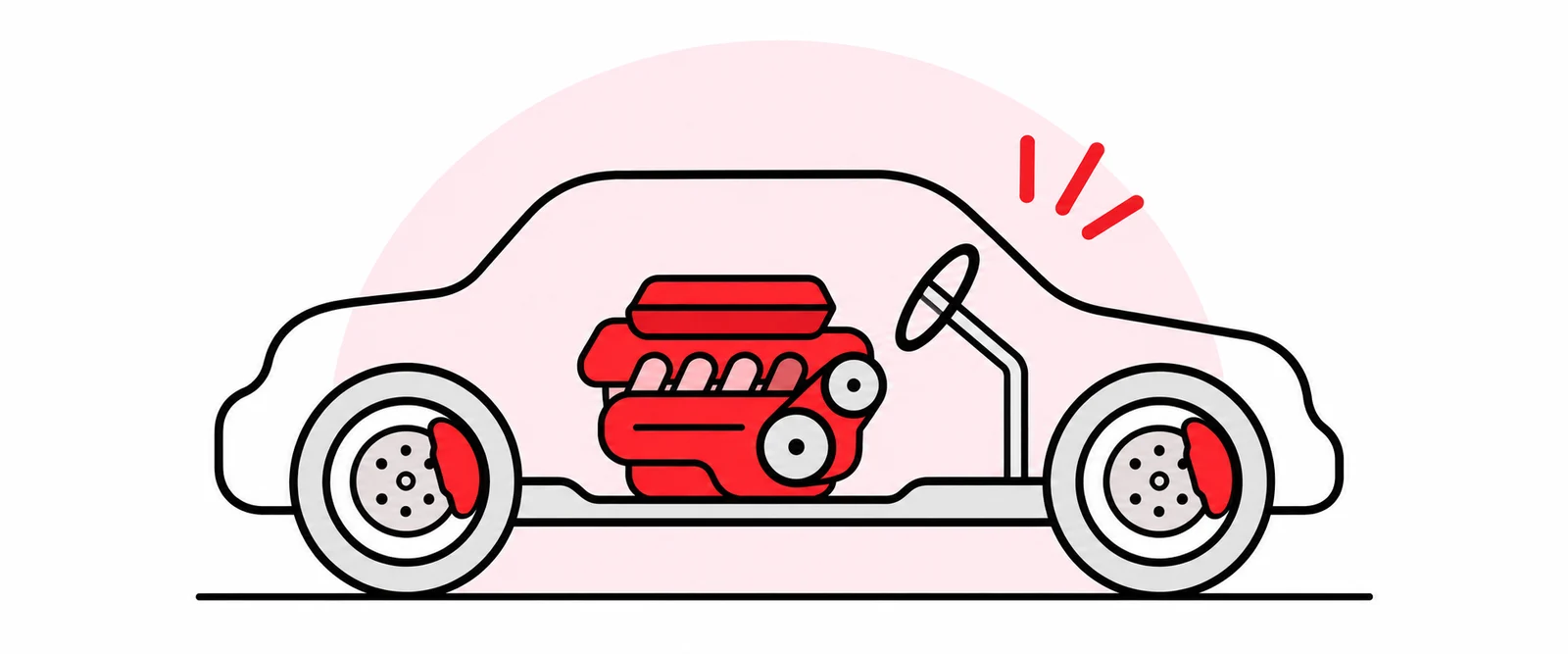
Claude Code, Codex and Cursor are all harnesses. So is the chat app on your phone. Anthropic describes its own Agent SDK as “a powerful, general-purpose agent harness”. The model is the engine. The harness is the rest of the car: the steering, the brakes, the dashboard, the GPS.
An engine on a workbench is impressive. It doesn’t take you anywhere.
A kitchen analogy
I’ve spent most of my career in restaurant tech, so here’s the version that clicks for me.
The model is a talented cook. The harness is the kitchen.
The recipes are the instructions. The stations and equipment are the tools. The ticket rail is the context: what’s been ordered, what’s already on the grill. The rhythm of fire, plate, expo, next ticket is the loop. And the expo who checks every plate before it goes out is the guardrail.
Put a great cook in a bad kitchen and you get slow, inconsistent food. Put an average cook in a great kitchen and you’ll often get a better meal. Most of what guests experience as “quality” is the kitchen doing its job.
AI works the same way. As one explainer put it, “A model can only choose actions the harness exposes.”
Where I learned this the hard way
When I started building with AI, I thought the work was the prompt. Find the right words, get the right answer.
It isn’t. My best results came when I stopped hunting for one perfect prompt and built a pipeline instead: steps, handoffs and checks. That’s a harness, I just didn’t have the word for it yet.
The same thing happened when I built an MCP server for my family’s chores app. The model didn’t get any smarter. I gave it tools it could use, and suddenly it could do useful work instead of just talking about it. And when I started treating Claude as a collaborator, most of what changed was the setup around it: standing instructions, project files, memory of past decisions.
The biggest jump was on a recent app build, where two months of work took three days. What made that possible was that the plan, the tickets, the code and the design system were all connected and visible to the agents. Not a smarter model. A better harness.
Why the labs are talking about it
The AI labs have started saying this out loud.
Anthropic wrote about harnesses for long-running agents. The problem: an agent working on a big task runs out of memory partway through and starts the next session from scratch. Their fix was a progress file, a feature list and a clean history the agent reads at the start of every session, the same way a good shift handoff works in a kitchen.
OpenAI called its version harness engineering. Their engineers say their hardest problems “now center on designing environments, feedback loops, and control systems.” Their summary of the new division of labor is four words: “Humans steer. Agents execute.”
What this means for product people
Three things I’d take from it.
Judge AI products by their harness. Two products on the same model can perform completely differently. When you evaluate a tool, ask what it can actually reach, what it remembers, how it checks its own work and what happens when it gets something wrong.
The harness is product work. Deciding which tools an agent gets, what it’s allowed to do without asking and what “done” means are product decisions. They’re the same calls we already make about any feature: scope, permissions, acceptance criteria. If your team is building with agents and no product person is shaping the harness, engineering is making those calls by default.
Your org already has a harness. Briefs, definitions of done, review steps and clear ownership are how good teams get reliable work from people. Agents need the same things, written down. I’ve argued that every agent needs an owner and someone who signs off. That’s a harness decision too.
Models will keep getting better, and that matters. But the next time an AI tool impresses you, or lets you down, look at the kitchen before you blame the cook.