The most expensive guest in a restaurant loyalty program is often the one who loves you most.
They were coming in every Tuesday before the program launched. Now they come in every Tuesday and get a free drink for it. The program’s dashboard shows another active member and another redemption. The P&L shows the same visit at a lower margin.
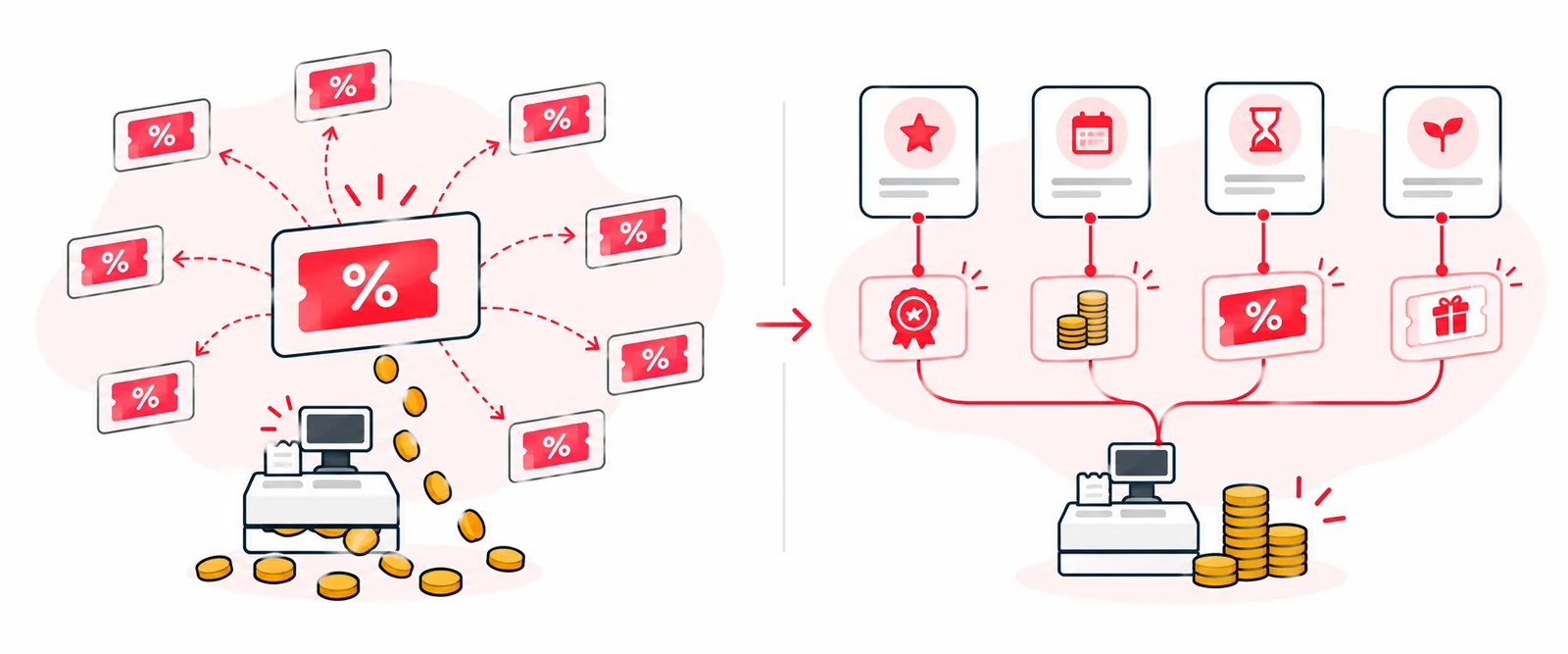
That’s the quiet way loyalty programs fail. Not with low sign-ups or ignored offers, but with high redemption from guests who never needed the incentive. You end up paying your best customers to keep doing what they were already doing.
Why loyalty programs attract the guests who need them least
A new loyalty program fills up fastest with your regulars. They visit most, so they notice the program first and have the most to gain from it. That’s not a flaw; you want them in it. The problem is what you give them once they’re there.
Three habits make it expensive:
- The same incentive for everyone. A blanket “20% off this week” goes to the guest who comes daily and the one who hasn’t been back in three months. Only one of them needed a reason to visit.
- Thresholds your regulars hit anyway. If a free item takes ten visits and your regulars visit ten times a month, the reward is just a monthly discount on behavior you already had.
- Measuring the wrong thing. Members, redemptions and offer usage all go up when you give away more. None of them tell you whether a visit happened because of the incentive.
A popular offer isn’t the same as a loyal guest
The clearest example I’ve seen is a monthly partnership offer with a telecom company, where the carrier’s subscribers get a free or discounted item in the app.
As a sales lever, it works. A lot of people use it, every month, and it brings in revenue and some profit. By the numbers that usually get reported, redemptions and offer revenue, it looks like a hit.
What it doesn’t do is build loyalty. We never saw a halo: no lasting growth in the active user base, no lasting lift in how often those guests ordered. Some stuck around for a week or so after redeeming. Then they dropped back to exactly where they were before. Without the offer, most of them simply didn’t come back.
So the honest read is mixed. The offer is good business on the day it runs. But a large share of the value goes to guests who are loyal to the deal, not to the brand. They show up for the free item, and nothing about the experience gives them a reason to return on a Wednesday.
That’s the trap in judging offers by how many people use them. Popularity tells you the deal is attractive. Only what guests do after the offer, when there’s nothing in it for them, tells you whether you bought a relationship or rented a transaction.
Points, rewards and offers are different tools
A rewards program isn’t one lever. It has several distinct pieces, and each does a different job:
- Points set the pace of earning. They shape long-term habits, and their cost depends on how fast guests earn and what they can cash in for.
- Rewards are what points buy. They’re a promise to your most engaged guests, and they’re where recognition matters more than discount.
- Offers are deals you can aim: a specific guest, a specific moment, a specific item. They’re the sharpest tool for changing behavior, and the most expensive one to point at the wrong person.
Most margin leakage comes from using the blunt tool where the sharp one belongs: a broad offer where a points boost or a targeted reward would have done the job.
Match the incentive to the guest
The goal isn’t to give less. It’s to give the right thing to each kind of guest, so every incentive buys behavior that wouldn’t have happened otherwise.
| Guest | What you want from them | What works | What wastes margin |
|---|---|---|---|
| Regulars | Keep coming; spend a little more | Recognition, early access, rewards on add-ons | Discounts on what they already order |
| Occasional guests | Come more often | Visit challenges, bonus points for a second visit this month | Big one-off discounts |
| Lapsing guests | Come back | A targeted offer, timed to when they usually visited | Waiting for them to see a general promo |
| New members | Make a second visit | One welcome offer, used on visit two | A long list of offers on day one |
| Deal-seekers (e.g. partner promos) | Come back without a deal | A next-visit incentive that asks for something: a second order, a full-price item, joining the program | Repeating the same free item every week and calling it retention |
Regulars don’t need a discount to show up. They need to feel like the program sees them: early access to a new item, a surprise reward, status that’s visible in the app. When you do give them something, aim it at the basket, not the visit: a reward on a side or a drink they don’t usually add.
Occasional guests are where frequency is won. A challenge (“three visits this month, get a reward”) or bonus points on the next visit gives them a reason to come back sooner, and you only pay when they do.
Lapsing guests are where a real discount earns its keep. A guest who stopped coming wasn’t going to visit anyway, so an offer that brings them back is close to pure incremental revenue. This is the right place for your sharpest offers.
New members need one thing: a reason to come back a second time. One strong welcome offer, aimed at the second visit, does more than a menu of deals they’ll forget.
Deal-seekers are the guests partner promotions bring in. Treat the promo as acquisition, not loyalty: the free item is the cost of getting them in the door once. The job is to turn that visit into a second one that isn’t free, with an incentive that requires a full-price order or a program sign-up, and to measure whether it worked.
Make every incentive margin-aware
Not all incentives cost the same, even when they look the same to the guest.
- Prefer high-perceived-value, low-cost items. A free drink or side often feels as generous as a percentage off and costs far less.
- Discount the add-on, not the anchor. An offer on fries with a sandwich grows the order. An offer on the sandwich alone discounts the reason they came.
- Watch what offers stack with. An offer that combines with another promotion, a reward and a points multiplier can quietly turn a profitable order into a loss.
Measure incrementality, not redemptions
The only question that matters for an incentive is: did it change what the guest did?
The most reliable way to answer it is a holdout. Before you send an offer, set aside a random slice of the eligible guests who don’t get it. Afterwards, compare the two groups: visits, spend and margin. The difference is what the offer actually bought. Everything the holdout group did anyway is what you’d have given away for nothing.
Holdouts feel like leaving money on the table. They’re the opposite: they’re how you find out which incentives are leaving money on the table.
For partnership and blanket offers, add one more check: follow the guests who redeemed for the next four to eight weeks. If their visits return to where they were before, the offer drove a transaction, not a habit. That’s still worth something, but price it like acquisition, not loyalty.
Then judge the program on the right numbers:
- Incremental visits and incremental margin, not redemptions.
- Guest lifetime value, not this week’s order size. A program that moves a lapsing guest back to monthly visits is worth more than one that adds a dollar to orders that were going to happen anyway.
The short version
- Your loyalty program will fill up with your best guests first. That’s fine. Don’t pay them for visits they’d make anyway.
- A popular offer isn’t proof of loyalty. Watch what guests do after it ends.
- Use points, rewards and offers for different jobs.
- Match the incentive to the guest: recognize regulars, challenge occasional guests, win back lapsing ones, give new members one reason to return.
- Choose incentives that feel generous and cost little.
- Hold out a control group and measure what each incentive actually changed.
Loyalty isn’t something you buy with discounts. It’s something you earn by making the experience worth repeating, and then rewarding it in ways that don’t cost you the margin the experience created.