Jobs to be done is my favorite product framework, and it’s not close.
The idea is simple. Guests don’t buy a product. They hire it to do a job. A guest doesn’t want a restaurant app. They want lunch before their next meeting, or dinner the kids will eat, or the free fries they were promised. The app is just the thing they hired to get there.
Once I know what those jobs are, most of the hard decisions in product get easier. I know what matters, what doesn’t, and what has to come first.
Where it comes from
The framework is Clayton Christensen’s, and his best-known example is a milkshake. A fast-food chain wanted to sell more of them and kept asking customers how to make the shake better: thicker, sweeter, more flavors. Sales didn’t move. When his team looked at who was actually buying them, a lot of shakes went out in the morning, to people driving to work alone. They were hiring the shake to make a long, boring commute bearable and keep them full until lunch.
Seen that way, the shake wasn’t competing with other shakes. It was competing with bananas, bagels and boredom. That’s a completely different product brief, and no amount of asking “how do we make a better milkshake?” would have found it.
That’s the part I love. The framework doesn’t ask what people want. It asks what they’re trying to get done, which is something they can actually tell you.
What matters: the jobs
When I took over the Jack in the Box app, it had a 2.6-star rating and thousands of one-star reviews. There was no shortage of ideas for what to build. What we didn’t have was a way to decide.
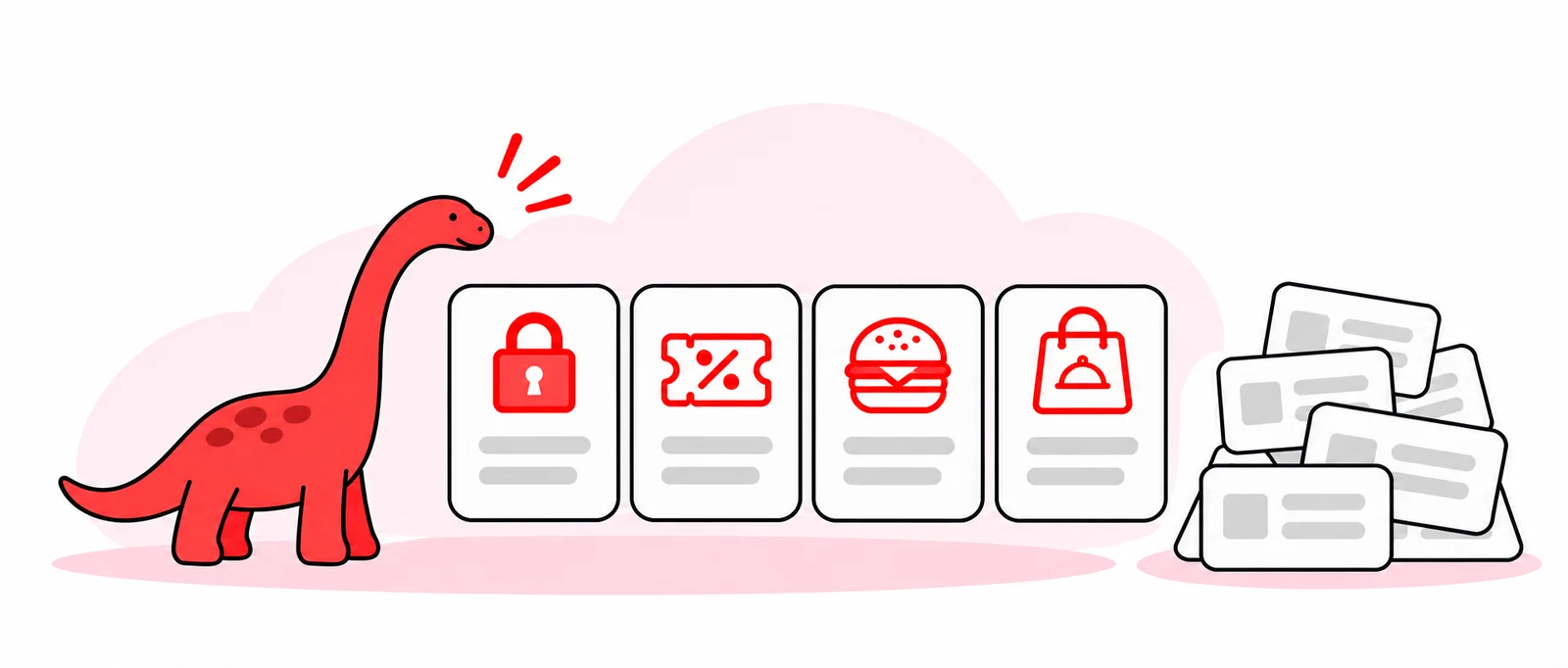
So we sorted the reviews by what guests were trying to do when it went wrong. Almost all of them landed in four jobs:
- Sign in.
- Redeem an offer.
- Find something to eat.
- Check out.
Those four jobs became the roadmap. Not a list of features, a list of jobs, and every piece of work had to make one of them faster, easier or more reliable. Eight months later the app was at 4.8. I wrote about how we got guests to tell us where those jobs broke in ask guests where it’s broken, not what to build.
A job is written from the guest’s side, in plain words, with no feature in it. “Get my order in before I pull out of the parking lot.” “Use the deal I came for without hunting for it.” If a job statement names a button or a screen, it’s a solution wearing a job’s clothes.
What doesn’t: everything that serves no job
This is where the framework pays for itself. Every request, idea and executive suggestion gets the same question: which job does this help a guest do?
A promo banner on the home screen? If it helps a guest find the deal they came for, it serves a job. If it’s there because a campaign needs impressions, it doesn’t, and the guest who opened the app to reorder lunch has to scroll past it.
Dark mode, a new loyalty tier, a redesign of a screen nobody complains about: some of these are fine ideas. But if none of them makes a core job better, they wait. That’s not me being difficult. It’s the jobs deciding, and the jobs came from guests. It’s the easiest way I know to say no to a feature request without making it personal.
It also cuts the other way. Plenty of things inside a flow serve the business, not the guest. A required field, an extra confirmation, a step that exists because of how the back end works. If a step doesn’t help the guest get the job done, it’s friction, and it should have to earn its place.
When: the order comes from the jobs too
Knowing the jobs doesn’t just tell you what to build. It tells you the order. Some jobs gate others: a guest who can’t sign in can’t redeem an offer. A job guests do on every visit beats one they do once a year, and a job that’s broken beats one that’s merely clunky.
To turn that into a roadmap, I pair the jobs with the MoSCoW framework, one milestone at a time. For each job, the Musts are only what it takes to complete the job’s simplest happy path; everything else waits. I walk through the whole process in how I build a roadmap with jobs to be done and MoSCoW.
And when the jobs change, the order changes. A new channel, like a guest ordering through an AI agent, is the same job done a new way. The question stays the same: is the job getting done, and where is it breaking?
How to find the jobs
You don’t need a research team. You need to watch what guests are trying to do.
- Read the complaints by moment, not by topic. One-star reviews, support tickets and chat logs all describe a job that broke. Tag each one with what the guest was trying to do when it happened. I walked through doing this in a spreadsheet in how to build an app review taxonomy.
- Look at what guests do right before they leave. The last screen before an abandoned order is usually the middle of a job that failed.
- Ask about the last time, not in general. “Walk me through the last time you ordered” gets you the real job. “What do you want from the app?” gets you a feature list.
- Stop at a handful. If you have twenty jobs, you have features with new names. Most products have three to six that matter. Jack in the Box had four.
Where I’d start
Write down the three to five jobs your guests hire your product to do, in their words, with no features in them. Then put your current roadmap next to that list and mark which job each item serves.
Anything that doesn’t map to a job is a candidate to cut or delay. Any job with nothing on the roadmap is a gap. And the job that happens most, fails most and blocks the others is what your team should be working on next.