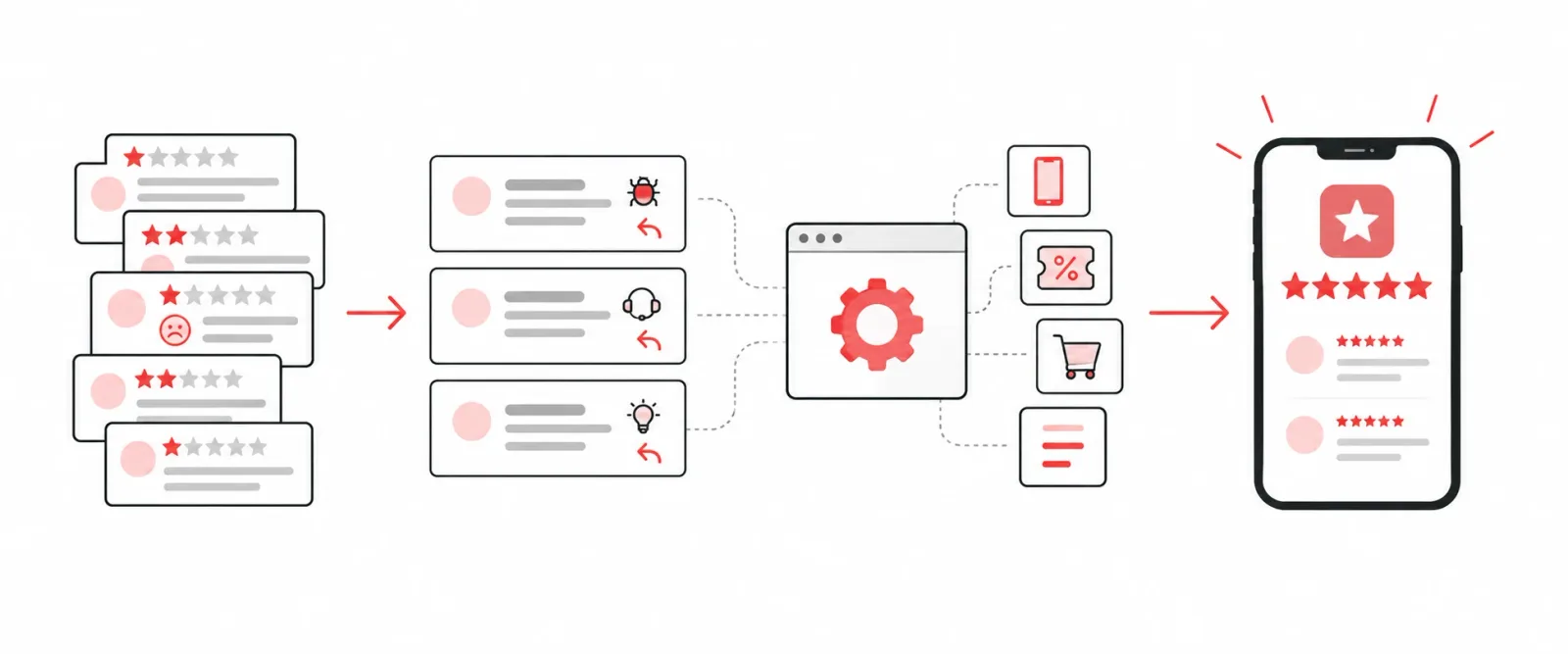
Search for how to improve an app store rating and half the advice is about replying to reviews. Reply to every one. Reply within 24 hours. Use their name. Use templates.
Some of that is fine. But when the Jack in the Box app went from 2.6 to 4.8 stars, replies weren’t what moved it. Fixing what the reviews were describing was. Replying to reviews is reputation management. It isn’t product work, and teams that confuse the two end up very good at apologizing for an app that stays broken.
So should you respond? Sometimes. Here’s how I’d decide.
When a reply is worth writing
When it’s a bug you’ve fixed. This is the best reply there is. “This was a sign-in bug, and it’s fixed in our latest update. Update the app and you should be back in.” It’s specific, it’s useful, and the reviewer gets a notification and can change their rating. It also tells everyone else reading the reviews that the problem is gone.
When it’s a bug you’ve confirmed but not fixed yet. Say so, plainly, without a promise you can’t keep. “We’ve reproduced this and are working on it” is honest and builds more trust than silence.
When the guest needs help only a person can give. A charge that went through on a failed order, lost loyalty points, a locked account. Point them to the channel that can actually fix it, and make sure that channel does.
When the review is wrong in a way that will mislead others. If someone says a feature doesn’t exist and it does, a short, friendly pointer helps the next reader.
When it’s a distraction
Vague anger. “Worst app ever” with no detail can’t be answered usefully. A templated apology adds nothing and signals you’re not reading.
Complaints about the restaurant, not the app. A wrong order at the window is real, but the app store isn’t where it gets solved. Route it, don’t debate it.
Replying instead of fixing. If you’re writing the same reply to the same complaint every week, you don’t have a response problem. You have a product problem, and the replies are the tax you pay for not fixing it.
What a good reply looks like
- Short. Two or three sentences. Long replies read as defensive.
- Specific. Name the problem and the fix or the next step. “We’re sorry for any inconvenience” says nothing.
- Human. Written by someone who read the review, not a template that happened to match a keyword.
- Never argumentative. You won’t win, and everyone else is reading.
Templates are fine as a starting point for common categories, as long as someone edits each one to fit.
What actually moves the rating
If your goal is a better number, replies are a small lever. The big ones are:
- Read the reviews as data. Sort complaints into the jobs that failed. Here’s how to build that taxonomy.
- Fix the highest-volume failures. At Jack in the Box that meant sign-in, offer redemption, failed orders and menu navigation, in roughly that order.
- Ask for ratings at the right moment. Right after a successful order, not on launch and never after an error.
Do those and the reviews change on their own. Fewer people have something to complain about, and the people having a good experience get asked at the moment they’re happiest.
A simple policy
If you want something your team can follow:
- Reply to every review that describes a specific, fixable bug, and update the reply when the fix ships.
- Route account and payment problems to support within a day.
- Don’t reply to vague anger or to complaints that aren’t about the app.
- Every month, count which complaints you replied to most. That’s your roadmap, not your reply queue.
The goal isn’t a perfect response rate. It’s fewer reviews that need a response.
Part of How to improve your app store rating. Related: Your app store rating is lying to you.